Dr. Caligari's cabinet is now so crammed that he had to stow stuff in the Cupboard. Time may wound all heels but once in a while you need a cup of tea.
Although the new year has been celebrated since prehistoric times, it was celebrated on the vernal equinox rather than what we now consider the first of the year. The Romans were the first to recognize New Years Day on January first. Rather than tie the day to some significant astronomical or agricultural event, in 153 BC the Romans selected it for civil reasons. It was the day after elections in which the newly elected assumed their positions.
Years later, Julius Caesar wanted to change the date to a more logical date but that year, January 1, 45 BC was the date of a new moon. To change it would have been bad luck. He did, however, change the calendar system from the Egyptian solar calendar to the "Julian" calendar, named for Caesar. July, the month of Caesar's birth, was also named after him to recognize him for his calendar reform. And look what it got him.
Up unto 1582, Christian Europe continued to celebrate New Years Day on March 25. Pope GregoryXIII instituted additional calendar reforms bringing us the calendaring system of the day. The Gregorian calendar was adopted by Catholic countries immediately while the reformists, suspect of any papal policy, only adapted it after some time. Today most countries around the world have adopted this calendaring system.
From primitive man to today, it has been recognized as a day in which rites were done to abolished the past so there could be a rejuvenation for the new year. Rituals included purgations, purifications, exorcisms, extinguishing and rekindling fires, masked processions (masks representing the dead), and other similar activities. Often exorcisms and purgations were performed with much noise as if to scare away the evil spirits. In China, Ying, the forces of light fought Yang, the forces of darkness with cymbals, noisemakers, and firecrackers.
Early European-Americans adopted the New Year celebrations from their homelands. However, it was noted by early settlers that native Americans already honored News Years Day with their own customs. Their rituals coincided with those around the world including fires, explosions of evil spirits, and celebrations. Today many of the New Year celebrations actually begin with a countdown to the New Year on the evening prior. It is customary to kiss your sweetheart when the clock strikes midnight as one of the customs of these New Years Eve parties.
Around the world, different cultures have their own traditions for welcoming the new year. The Japanese hang a rope of straw across the front of their houses to keep out evil spirits and bring happiness and good luck. They also have a good laugh as the year begins to get things started on a lucky note. In Argentina, people wear brand-new pink underwear to attract love. While in Brazil, people wear none; that usually works better.
In Germany, every year on December 31st, TV networks broadcast an 18-minute-long skit in English called Dinner for One.
In 1963, Germany’s Norddeutscher Rundfunk television station recorded the sketch, performed by the British comics Freddie Frinton and May Warden. Since its initial recording, the clip has become a New Year’s Eve staple in Germany. The clip holds the Guinness World Record for Most Frequently Repeated TV Program, (although Dinner For One has never been broadcast in the U. S. or Canada.)
In Siberia, brave divers plant the New Year's Tree underneath frozen lakes — sort of like a polar plunge. Much like a Christmas tree, the Siberian New Year Tree (or yolka) is supposed to signify the coming of Father Frost, but its planting also symbolizes starting over. The jumping-into-a-frozen-lake challenge is just another addition to the year-end festivities.
In Italy, nothing says “Happy New Year” like red underpants. Red underwear is a staple of the New Year’s tradition in Italy. The color choice invokes centuries-old superstition that the color keeps bad luck and evil at bay, and encourages good luck. Now, even if you find yourself in Rome without a pair of rosy unmentionables, no worries. Shops and street vendors have plenty for sale.
In South Africa, people throw appliances out the window (watch out!!). In Denmark, you break a dish for a friend. They save their old dishes only to throw them by the dozen at the doorsteps of family friends on New Years. In theory, the bigger the pile of broken dishes you find on your door steps, the bigger pile of friends you have.
New Year Resolutions are simply another way to wish away the past in exchange for hopes of the future. It is where the phrase turning over a new leaf originated. I hope 2023 brings good health and better luck to all.
December 31st - Richard Hoffman
All my undone actions wander
naked across the calendar,
a band of skinny hunter-gatherers,
blown snow scattered here and there,
stumbling toward a future
folded in the New Year I secure
with a pushpin: January’s picture
a painting from the 17th century,
a still life: Skull and mirror,
spilled coin purse and a flower.
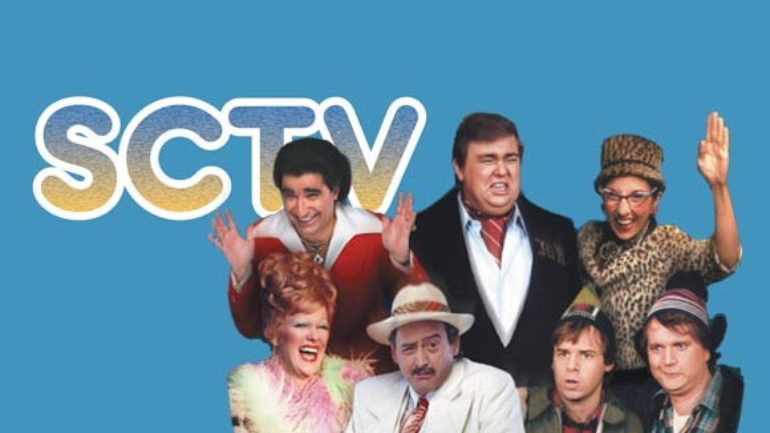
Before our feature presentation, ACME would like to start the evening with an SCTV Christmas special, from 1981.
This episode is must-watch viewing in my house every Christmas and it's also one of the best episodes of a great series.
Most of the staff of ACME have taken the rest of the year off. But we already paid for the hall and didn't want to leave an empty space. So why not sit back and relax (quick, find the most comfortable seat on the sofa,) get a snack (perhaps, some popcorn,) and a beverage and join The ACME Eagle Hand Soap Radio Hour in watching a few mash-ups we have for you on this last Thursday of 2022 -
Movies touch our hearts and awaken our vision, and change the way we see things. They take us to other places, they open doors and minds. Movies are the memories of our life time, we need to keep them alive. - Martin Scorsese
I don't think there's any artist of any value who doesn't doubt what they're doing. - Francis Ford Coppola
... Our works in stone, in paint, in print, are spared, some of them, for a few decades or a millennium or two, but everything must finally fall in war, or wear away into the ultimate and universal ash - the triumphs, the frauds, the treasures and the fakes. A fact of life: we're going to die. "Be of good heart," cry the dead artists out of the living past. "Our songs will all be silenced, but what of it? Go on singing." - Orson Welles
Jane should not have bought her husband that Roast Beef cologne.
We're home for the holidays, briefly - we're dropping off laundry and picking up clean clothes, (we're heading to the annual meeting of the ACME Corporation's board of directors. I never know if one of the largest shareholders, Wile E. Coyote will show up or not?)
I found another Christmas gift way in the back, behind the Christmas tree. (I may find some more during the week.)
Even though Margaret Sullavan was infamous for her quick temper and disdainful attitude towards Hollywood, James Stewart counted working with her as one of the great joys of his professional career. And because he knew her personally, he was more equipped than most of the cast and crew members to deal with her frequent and volatile emotional outbursts.
Here's another mash-up of year end review videos: this one, by Steven Gordon, is trailer mashup of 2022 films -
Once again we ask, "How many of them have you seen?"
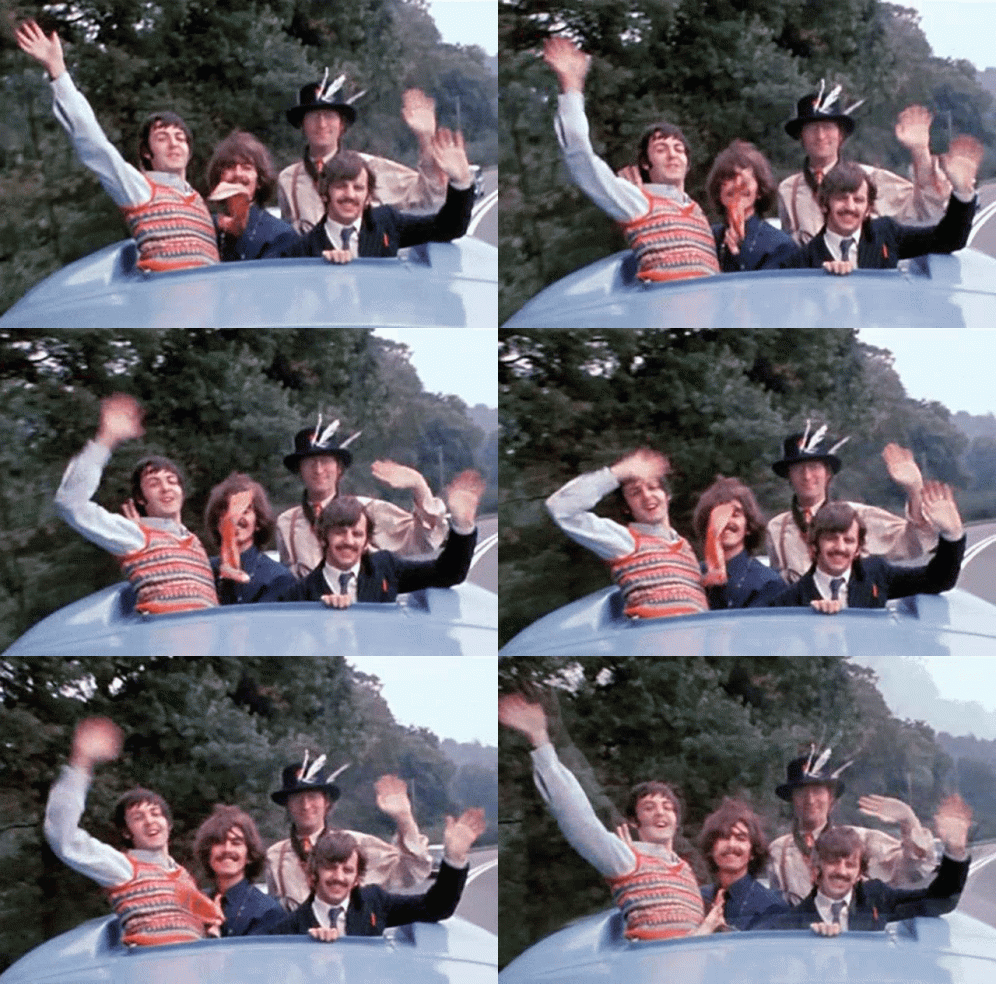
On this Boxing Day, let's join this convivial group of merrymakers on their holiday journey.
"Mystery tours", overnight bus rides to unknown destinations, were popular in England as low-budget weekend getaways. Most of this movie was shot in a rented bus filled with friends, acquaintances, Beatles office staff, a camera crew, and a handful of experienced actors, rambling around the English countryside one holiday weekend. Everyone was encouraged to invent his or her own character, let whatever was going to happen happen, and the results would be magical. Unfortunately, most of the passengers "acted" like anyone else travelling on a bus tour. John Lennon and George Harrison spent most of the trip sleeping or avoiding the cameras. The bus, with a hand-lettered "Magical Mystery Tour" sign, attracted curious on-lookers who began following in droves. Suggestions to film the chaos mounting outside were shot down. Lennon ultimately ordered the bus to stop, got out, and tore the lettering off the sides. He later derided the whole program as "The most expensive home movie ever made."
Since it's the end of the year there are lots of year end review videos. I usually find the time to post a few: this one, United State of Pop 2022 (I Want Music), is one of the more famous
I no longer pretent that I do not have to ask the kids to tell me what some of the songs were.
(Sorry for the delay, we made way too much merry last night.)
It's the eighth night of Hanukkah
A final reason Hanukkah feels better than Christmas -
You can't be nailed to a menorah.
You've probably run out of gifts at this point, wrap your family's fresh laundry as the gift that shows you've done the laundry. At this point, look up a local oil recycler - it will do better for everyone as a biofuel.
And here, I promise, is the last set of songs celebrating Hanukkah -
Hanukkah With Veronica Monica -
Chanukah in Santa Monica GMCLA -
Kurstin x Grohl: The Hanukkah Sessions 2022: Night Eight -
Thank you Mssrs Kurstin and Grohl for the holiday gifts
In The Market For A Miracle A Christmas Story -
Kids, this is the essential 11 o'clock number.
Eight Candles Dave Koz -
Happy HanukkahMatisyahu -
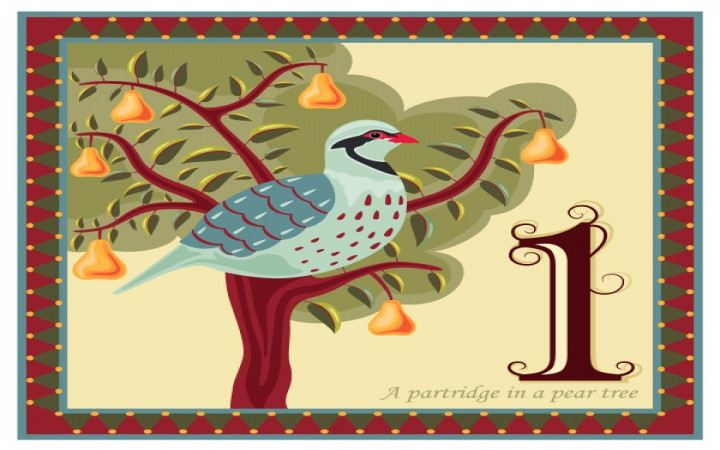
Your Christmas gifts are starting to arrive (we'll be keeping a count.)
(Remember, we are going to count this as a unit and not as two individual gifts.)
As today is the first night of Christmas, here are some more unusual gifts to consider giving -
You might have to find an old copy of the Savoy Cocktail Book, copyright 1930 (of which I have a copy,) in order to figure out what some of these drinks are.
Also, did you buy anyone a gift as inappropriate as a weasel in a bikini this holiday season?
Put your feet up and read a little bit about the History of Christmas
Christmas is one of the most widely celebrated holidays in the world, although the form of its observation varies widely from nation to nation. In America, our cultural kleptomania has allowed us to assimilate the most enjoyable of those traditions while discarding any stupid superstitions associated with them.
But it's worth reviewing those superstitions along with our traditions, if only to amuse ourselves yet again at the expense of our ancestors.
The winter solstice had long been celebrated by ignorant barbarians throughout the northern hemisphere as the time of the year when the sun stopped getting smaller and smaller and finally started getting bigger and bigger. The sun was important to these poor primitive bastards, in much the same way that we poor modern bastards find it so important. It was, after all, the Sun.
To avoid having to go out much during the darkest and coldest days of the year, the poor shivering Nordic bastards of Scandinavia would bundle up and sally forth into the woods to bring home great big logs which would often burn for as long as twelve days. As long as the log burned they would stay in and eat and drink and fornicate. They believed that every spark their log set off foretold the birth of a calf or pig in the new year, which only underscores the irony of the Nobel prize being awarded in Sweden.
They believed the sun was a big wheel (hwoel) that rolled away from the earth until the winter solstice, at which point it began rolling back toward us. This quaint ignorance charmed the weak and flabby peoples over whom the Vikings later swept like an apocalyptic affliction. However, these peoples could not pronounce hwoel and therefore called it "yule." This irritated the Vikings and eventually forced their retreat.
While the Norse were hauling those logs into their houses, others throughout Europe were enjoying some of the finest dining of the year. Since it was too expensive to feed and shelter animals through the cold weather, those in northern climes killed their livestock at the onset of each winter. This provided their only steady supply of fresh meat all year, and went nicely with the wines and ales which had finally become fermented. The inevitable gastrointestinal distress that followed these binges is probably responsible for the primitive Germans' fear that the god Odin was flying around the sky above them during the solstice, deciding who was naughty and who was nice. It was not entirely academic: Odin's invariable sentence for the naughty was death.
Peasants everywhere also liked to bring sprigs and boughs of evergreens into their homes around the time of the solstice to remind themselves that sooner or later all that awful cold and snow would end and it would get warm enough to eat, drink, and fornicate outdoors. The Druids of the British Isles brought evergreen boughs into their temples every winter as a sign of everlasting life, and the Vikings thought that evergreens were the particular plant of their own sun-god, Balder (so-named because they mistook the sun for his shiny, hairless cranium). Even the Egyptians worshiped their sun-god Ra's "recovery" by bringing palm rushes into their homes. It's not clear how this was intended to help poor Ra, but he always pulled through.
In ancient Rome, the festival of Saturnalia began the week before the solstice and lasted a full month. Romans ate and drank and fornicated during this festival in honor of Saturn, the god of Agriculture. They filled their homes with evergreen boughs to remind themselves that everything would be green again eventually. They also let slaves become masters for the duration of the festival, and the plebeians were put in charge of the city. It was a crazy, topsy-turvy time, with all sorts of nutty mix-ups. Overlapping with Saturnalia around the time of the solstice was Juvenalia, a feast to honor the children of the city.
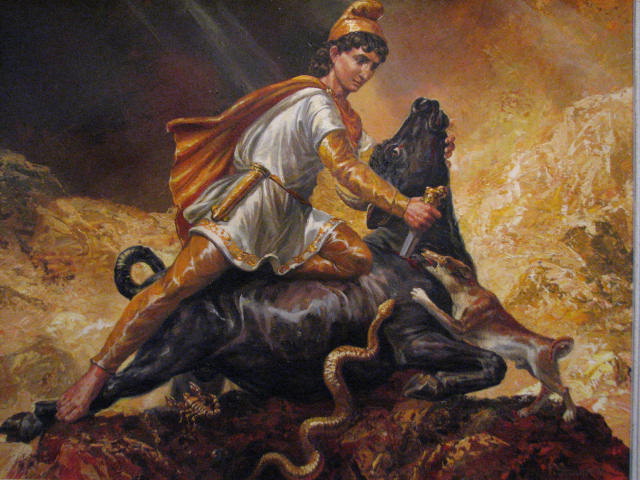
The winter solstice fell on December 25 in the year 274, and the pagan Roman Emperor Aurelian declared that day a holiday: the festival of the birth of the Invincible Sun. The Invincible Sun was also known as Mithra. Mithra was an infant god who had been born from a rock (presumably virgin rock). The Roman upper classes, with their special fondness for rocks, honored this holiday as one of the most sacred in the year.
Meanwhile, the noisy little sect of Christianity had started to gather some steam.
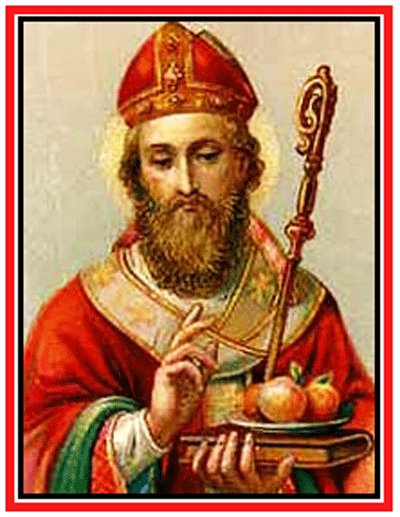
St. Nicholas was born around this time in what is today Turkey, but was then just another primitive desert backwater full of bickering barbarians. One popular story about St. Nicholas was that he had saved three sisters from being sold into slavery or prostitution, or both, by sneaking money for dowries into their shoes and socks. He died on December 6, and this was subsequently celebrated as his feast day. It came to be considered a lucky day on which to buy things or get married. He was honored as a protector of children and sailors. By the Renaissance he had topped all the European charts to become the most popular saint ever, probably on account of widespread sailors and children.
In the fourth century, church leaders decided to begin celebrating the birth of Jesus, since it seemed morbid just celebrating his death. No one is really sure when Jesus was born, although most scholars are pretty sure it wasn't late December and most astrologists are quick to point out that Jesus doesn't seem like a Capricorn.
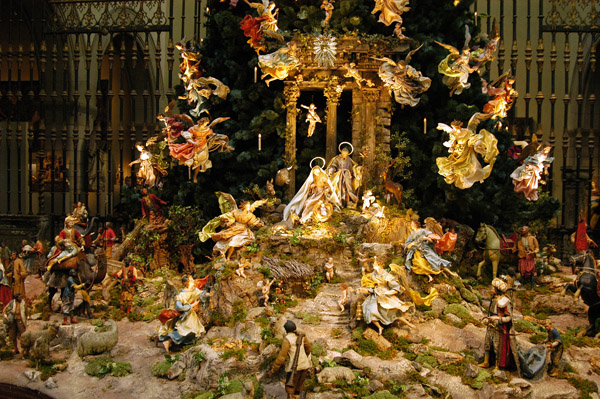
Pope Julius I chose to declare December 25 as Jesus' birthday, since people were already used to celebrating at that time of year. The holiday was called the Feast of the Nativity, and by the end of the eighth century it had spread across all of Europe, even to those remote and primitive corners where people still thought the Sun was a big yellow wheel.
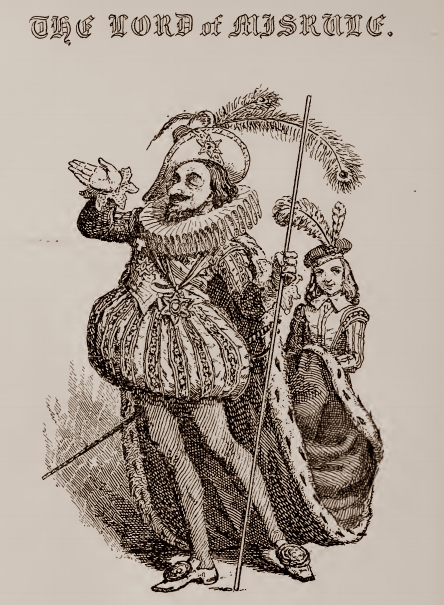
By the middle ages Christianity had penetrated almost all of Europe, but Christmas was still a blend of ignorant barbarian superstitions and unbearable religious seriousness. Christians would attend a Christmas mass on December 25, then eat, drink, and fornicate like they did in the old days. They would crown some wretched beggar the "lord of misrule," and the drunken revelers would happily and laughingly obey his every command. The poor would show up at the doors of the rich and demand food and drink, and if they were denied they would often laughingly burn down the house, beat its inhabitants, and rape the womenfolk and livestock before moving on to the next house. It was a very jolly holiday.
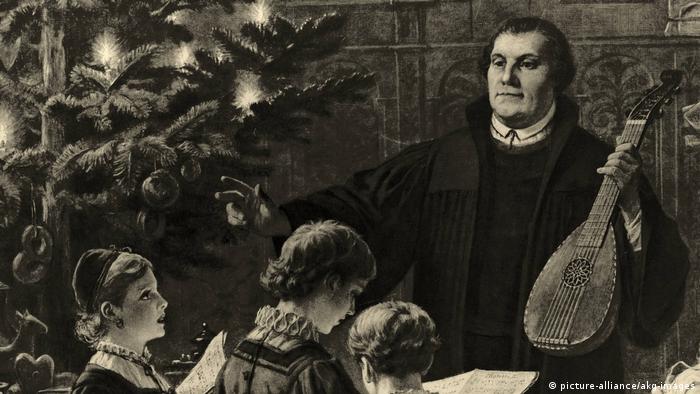
Devout Christians of sixteenth century Germany began trying to outdo the rest of Europe with their usual humorless Teutonic ambition. Instead of hanging a few little evergreen boughs about the hearth at Christmastime, they began hauling whole trees into their homes. According to legend, Martin Luther himself was walking home from a sermon one night when he was struck by the beauty of the glittering stars among the pines. When he got home he promptly decorated his own tree with candles. Despite the obvious fire hazard, this quickly became a popular tradition.
After the Reformation, puritans decided there was too much eating, drinking, and fornication associated with Christmas and that it was therefore bad. Many rulers outlawed it altogether. This was not usually popular: in England, for example, Oliver Cromwell cancelled Christmas, resulting in the restoration of Charles II and the retaliatory cancellation of Mr. Cromwell's head.
All of this was bad for Christmas, but such was St. Nicholas' popularity that it did little to deter from his reputation. He remained on top of the charts. Nowhere was he more popular than in Holland, where he was venerated as Sint Nikolaas, or more familiarly as Sinter Klaas.
The puritan bastards who settled America avoided Christmas as part and parcel of their longstanding commitment to No Fun.Massachusetts Colony actually penalized anyone caught celebrating Christmas with a five-shilling fine. Since it was considered an English holiday, it was ostentatiously ignored in the years during and after the Revolution, and wasn't made a federal holiday until after the Civil War (on June 26, 1870.)
Washington Irving had done his part in sorting through barbarian superstitions for things that were wholesome, pleasant, and commercial enough to be made officially American, and in 1809 he referred to St. Nicholas as the Patron Saint of New York. In 1822 an Episcopalian minister named Clement Clarke Moore wrote a frivolous poem for his daughters entitled A Visit from St. Nicholas. Mr. Moore cleverly ignored all elements of the good saint's biography involving slavery, prostitution, dowries, and sailors. He focused instead on sleighs, reindeer, and presents for good little American boys and girls. It was so silly and frivolous that it became one of the most popular American poems ever—second only to the one about the guy from Nantucket.
By 1820, American stores had begun to advertise Christmas shopping, and by 1870 children were flocking to Macy's to see Santa Claus. And so it was that America began applying its curious collective genius for assimilation to the vast storehouse of silly and primitive traditions from throughout the world.
Thus we need not concern ourselves with St. Lucia, the patron saint of the blind, whom Scandinavians honor each December 23 (Little Yule) with elaborate pagan rituals involving candles, torches, and bonfires.
We need not worry about the witch Babouschka, who visits Russian children with gifts each Christmas to compensate for a nasty little joke she once played on the wise men,
or the Italian witch La Befana.
We need not trouble ourselves with the construction of piñatas each holiday season, as Mexican parents must.
We don't have to sit around our tables as they do in Ukraine, waiting for the evening star to appear before we begin our meal. We need not fear the kallikantzeri of Greece, nasty little goblins that cause mischief for the twelve days of Christmas.
And let's not even talk about Krampus
Between the 16th and 19th centuries global temperatures were significantly lower than normal in what was known as a “little ice age”. Charles Dickens grew up during this period and experienced snow for his first eight Christmases. This “White Christmas” experience influenced his writing and began a tradition of expectation for the holidays. Let's all take a moment during these troubled times to express our gratitude and admiration for our American traditions, which are so much better than the traditions of every other country.
I wish for all you gentle readers, a happy, healthy and joyous holiday.