Thursday, January 30, 2014

I see all the birds are flown.

January 30, 1649 -
Once again, history proves that it's not always good to be the king (or apparently the man who overthrows him either).

Charles I was your average inbred near dwarf royalty that much of Europe was popping out at the time. He is listed in the Guinness Book of Records as the nation's shortest king ( just over 5 feet tall). He married another inbred royal princess (Princess Henrietta Maria of France) and that would have been that. Unfortunately for him, two issues got in his way - his wife was Catholic and after much tsuris, England was in a Protestant mood.
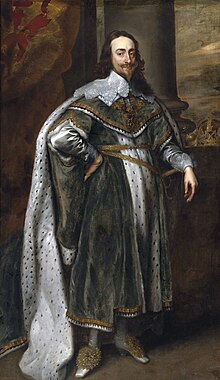
Also, Charles had picked up the nasty habit of believe in the Divine right of the Monarchy. Parliament was feeling it oats and would have none of it and this lead to the English Civil War. Rather than the Blue and the Grey, England had the Roundheads and the Cavaliers (it really doesn't matter who was who - but it might be on the test.)


Charles and his supported were defeated and Charles was put on a show trial for High Treason. Since Charles believed he had a Divine right to be King, he put up no defense. Parliament, wishing all the best to meet the Divine, convicted him of treason and ordered his execution.


When Charles was beheaded on January 30th, 1649, it is reputed that he wore two shirts as to prevent the cold January weather causing any noticeable shivers that the crowd could have been mistaken for fear or weakness. He put his head on the block after saying a prayer and signaled the executioner when he was ready; he was then beheaded with one clean stroke.


It was common practice for the head of a traitor to be held up and exhibited to the crowd with the words Behold the head of a traitor!; although Charles' head was exhibited, the words were not used. In an unprecedented gesture, one of the revolutionary leaders, Oliver Cromwell, allowed the King's head to be sewn back on his body so the family could pay its respects. Charles was buried in private and at night on February 7th, 1649, in the Henry VIII vault inside St George's Chapel in Windsor Castle.

This was Cromwell's big mistake.


Under Oliver Cromwell, England became a Republic and became Protectorate and ruled England until his death from malaria in 1658. He was succeeded as Lord Protector by his son Richard. Although Richard was not entirely without ability, he had no power base in either Parliament or the Army, and was forced to resign in the spring of 1659, bringing the Protectorate to an end. In the period immediately following his abdication, the head of the army, George Monck took power for less than a year, at which point, Parliament restored Charles II as king.


Now here's the kicker -


in 1661, Oliver Cromwell's body was exhumed from Westminster Abbey, and was subjected to the ritual of a posthumous execution. Symbolically, this took place on January 30; the same date that Charles I had been executed. As Cromwell was quite dead at the time, he could put up a very weak defense at best. His body was hung in chains at Tyburn. Finally, his disinterred body was thrown into a pit, while his severed head was displayed on a pole outside Westminster Abbey until 1685. Afterward, the head changed hands several times, before eventually being buried in the grounds of Sidney Sussex College, Cambridge, in 1960.

Sunday, January 26, 2014

Ernest Hemingway's Hamburger recipe

(Actual recipe as printed in the Paris Review)

Remember you probably need to be barechested while making these hamburgers, the hell with the grease slattering and be drinking fresh lime daquaris.

Ingredients–

1 lb. ground lean beef

2 cloves, minced garlic

2 little green onions, finely chopped

1 heaping teaspoon, India relish

2 tablespoons, capers

1 heaping teaspoon, Spice Islands sage

Spice Islands Beau Monde Seasoning — 1/2 teaspoon

Spice Islands Mei Yen Powder — 1/2 teaspoon

1 egg, beaten in a cup with a fork

About 1/3 cup dry red or white wine

1 tablespoon cooking oil

What to do–

Break up the meat with a fork and scatter the garlic, onion and dry seasonings over it, then mix them into the meat with a fork or your fingers. Let the bowl of meat sit out of the icebox for ten or fifteen minutes while you set the table and make the salad. Add the relish, capers, everything else including wine and let the meat sit, quietly marinating, for another ten minutes if possible. Now make your fat, juicy patties with your hands. The patties should be an inch thick, and soft in texture but not runny. Have the oil in your frying pan hot but not smoking when you drop in the patties and then turn the heat down and fry the burgers about four minutes. Take the pan off the burner and turn the heat high again. Flip the burgers over, put the pan back on the hot fire, then after one minute, turn the heat down again and cook another three minutes. Both sides of the burgers should be crispy brown and the middle pink and juicy.

(Spice Islands stopped making Mei Yen Powder several years ago. You can recreate it, she says, by mixing nine parts salt, nine parts sugar and two parts MSG.  With the measurement for this recipe, add a splash of soy sauce. )

After you eat on of these 1/2 pound babies, your body slick with animal grease, your brain fueled on Cuban Rum, you will probably want to wrestle someone in the home.

Saturday, January 25, 2014

Painch, tripe, or thairm

January 25, 1759 -
It's Robert Burns' birthday and people will be celebrating with a Burns Supper.


The Burns Supper is eaten all across Scotland each year on the anniversary of the national poet's birth. It consists of haggis and whiskey. It is customary for the host to read Burns' Ode to a Haggis at the dinner table, presumably as a diversionary tactic.


The haggis are a gentle breed of playful mammals indigenous to the Scottish highlands. They have never survived attempts at transplantation. They have been popular cuisine for as long as the British isles have been populated. Julius Caesar reflects in his memoirs that he tried to bring several thousand haggis back to Rome for breeding after his conquest of Brittania - a controversial decision that eventually led to civil war in the Roman Empire.


The ancient Picts of Ireland invaded and eventually settled Scotland in no small part because of their affinity for haggis. The ancient Celts migrated in the opposite direction to avoid it.

Haggis were traditionally trapped, killed, and prepared like most other small mammals. Toward the end of the eighteenth century, however, it became fashionable to drop living haggis, like lobster, into pots of boiling water.


This is because after boiling for half an hour the pelt peels off easily and can then be dried and used for in textiles. Haggis fur is especially popular in Scottish gloves, coats, and seat covers.

I would like to bring some attention to the terrible plight of the delicate and sweet-tempered Haggis, whose inoffensive lives are too often ended by being boiled alive at the hands of a boozy Scot.


In today's frigid atmosphere of political correctness, it is considered unfair to condemn the Scots for their grotesque maltreatment of these affectionate animals. To deplore their treatment of the haggis is to criticize their culture, and cultural criticism is an obscenity.

But Scottish culture? We're all grateful for whiskey, but is it enough to justify bagpipes and men in skirts? Has any other culture cried out so eloquently for condemnation?


According to People against the Indefensible Treatment of Haggis, more than eight million haggis were "ranched" for this year's festivities. Over six million of these ranch-bred haggis, beside whom veal calves might well be considered pampered, were sold to Scots who will take them home, boiled them alive, then skin and dismember them. The nearly two million not sold will be tossed alive into commercial blenders, mixed with fresh cream, frozen, and later sold as the popular Scottish summer treat, Haggis Ice.

Try looking into the trusting brown eyes of a haggis and explaining that it must be boiled alive and ceremonially dismembered for the sake of Scottish culture.


This horror must end. To help bring it home to Americans, I ask you to take a moment to reflect on our own Groundhog's Day. Each February 2, we honor the prognosticative skills of that curious little creature in a vast national celebration of pagan superstition.


How many groundhogs die for this celebration? None. How many groundhog mothers are separated from their groundhog children in order to satisfy our national groundhog needs? None. How many grandfathers stand at the heads of their dinner tables, proudly presiding over the dismemberment of a steaming groundhog carcass?

The Scots could learn a thing or two about ethical animal treatment from us. We could probably also teach them a thing or two about trousers.