Dr. Caligari's cabinet is now so crammed that he had to stow stuff in the Cupboard. Time may wound all heels but once in a while you need a cup of tea.
Friday, July 7, 2023
James Dean may have been a great actor -
But his habit of reading magazines aloud had a soporific effect upon all those who listened
Demand Euphoria!
Thursday, July 6, 2023
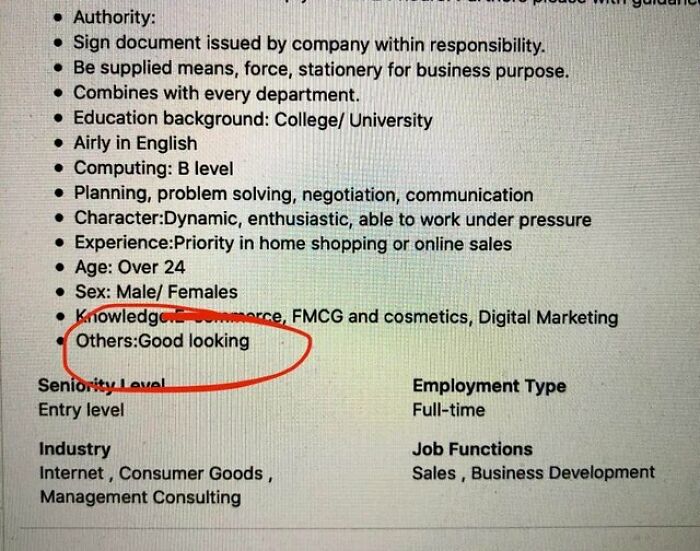
Have you graduated college?
if you're stuck for a career, why not consider a life of crime, especially in St. Paul.
Demand Euphoria!
Wednesday, July 5, 2023
Tuesday, July 4, 2023
When in the Course of human events ...
Unlike in years past, we are staying in an undisclosed location, doing our part bolster a neighboring states local economy
(This photo was taken at the behest of a multinational conglomorate.)
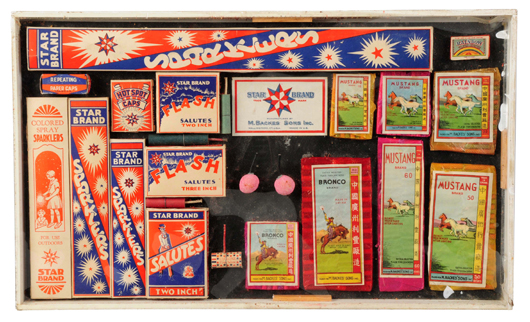
Please remember – Alcohol and fireworks do not mix!
Find some neighbor kid to light them for you.
Hope you're enjoying your holiday - Here's a few shorts before the main feature today:
Once again, ACME would like to share their salute to this Independence Day with the annual playing of the Bruce Springsteen clip of Fourth of July,
sponsored by ACME Split Buns - Slip your ACME Snappy Weinie - The Almost 100% all beef frank (but hey don't ask what the other stuff in it is) - in our well buttered Split Buns and feel the difference.
Uncle Joe is always permitted to enjoy this song and have hot dogs. Hell, Uncle Joe will fry ’em up and crack a beer or two for you. And while he’s at it, he may end his day with a nice ice cream cone.
If only for one day a year, it's important to remember that the British weren't always the friendly sort of people who gave us the Beatles, the Rolling Stones and Monty Python. They're also responsible for warm beer, vinegar-flavored potato chips, and irritating Anglophiliacs on our own shores schedule as shed-yule and issue as iss-yew. On July 4 of every year, therefore, we celebrate our forefathers having told them to screw.
We not only celebrate the purging of the British blight from our land: we celebrate the manner in which it was done, which was at once brilliant, daring, and easily adapted to the screen. The events that led to our independence are all the more worthy of remembrance, even inaccurately, at this crucial juncture in our history, and I therefore offer the following summary of American independence for the edification of my friends.
In 1774, representatives from each of the thirteen colonies convened in Philadelphia to complain. This was The First Continental Congress. Upon registering their various complaints, they returned home.
One of the colonists' primary complaints was that British cabbies working in the colonies refused to unionize. This was called "Taxis without Representation," and became the issue that ultimately pushed the simmering discontent of the colonies into outright hostility. Sensing the volatility of the situation, British troops advanced toward Concord in April of 1775, forcing Paul Revere to ride his horse (and not to ring bells and warn the British not to take our guns but let's not bring up Mrs. Palin on this holiday.)
The first shot that rang out at the battle of Concord was so loud that its sound reverberated all the way around the world. As a result, the British heard it behind them instead of in front of them. This caused the fog of war. Neither the British nor the Colonists were prepared for fog, so the War was postponed.
In May, representatives once again convened in Philadelphia to complain about the taxis, the fog, and other grievances. This was the Second Continental Congress. Unlike the previous Congress, however, this one tried to work out a deal with Britain's King George. This was difficult, as King George was insane and regularly confused the colonies for colostomies, causing considerable embarrassment to everyone involved but accruing great profit to Britain's flourishing proctology trade.
In June the Colonists developed a Continental Army and a Continental Currency, operating on the assumption that an insane king would be easier to deal with if they had a lot of money and guns. This assumption proved partly correct, as the Brits appeared to ease hostilities for nearly a year. It also proved partly wrong when, in May 1776, the Americans discovered that the King had been hiring German mercenaries to come kill them.
In June of 1776 the Colonists finally decided that instead of working something out with the British it would be easier and more satisfactory to shoot them.
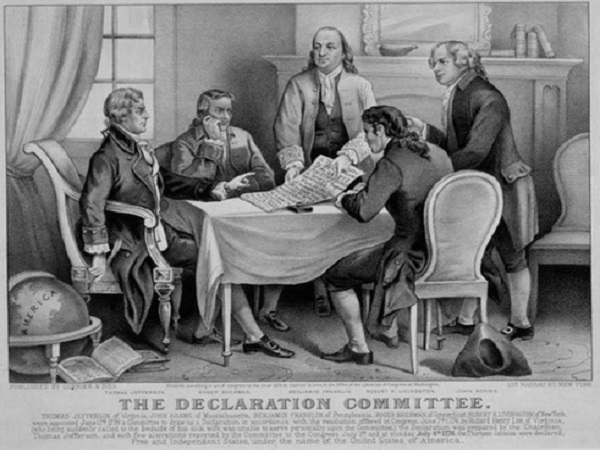
On June 7, Richard Henry Lee of Virginia read a resolution to the Continental Congress. The essence of his resolution was that King George and Great Britain could kiss his hairy American ass. The Congress appreciated Lee's sentiments, and subsequently formed a committee to write a note to King George in which it would be made plain why it had become necessary to start shooting the British.
The committee was chaired by Thomas Jefferson. Its four other members were John Adams and Benjamin Franklin (each of whom was counted twice for the sake of Stature - ok, ok, Roger Sherman and Robert Livingston were also on the committee.)
The Declaration of Independence wasn't a very long document, but little Tommy Jefferson was trying so hard to impress all the older guys that he overwrote it, using an archaic style of English that is best understood in translation.
Here is a translation of the Declaration in its entirety:
"It's a good idea to let people know why you're having a revolution. We think it's pretty obvious that any government that screws its people over is cruising for a bruising. We're not saying anyone with a hair up their butt ought to have their own revolution, but we've put up with an awful lot of crap from King George. He won't let us do anything on our own, and whenever we try, he sends people to kill us. We've asked him over and over to back off. We've told him over and over that we'd only put up with so much. But did he listen? No. So to hell with him and to hell with Britain and all their phony goddam accents. We'll kick their ass or die trying."
These were, what political scientists refer to as "fightin' words."
On July 4, 1776, the Declaration was presented to the Congress. Nine of the thirteen colonies voted to adopt it. Pennsylvania and South Carolina voted against it (we know where you live). Delaware couldn't make up its mind, and New York abstained. Copies of the Declaration were distributed the next day (photocopiers were much slower back then). On July 8 it was read aloud in Philadelphia's Independence Square.
The document wasn't fully signed until August, but as soon as it was, Americans began shooting the British in earnest. By February of 1783 they had shot enough of them that Spain, Sweden, Denmark and Russia officially acknowledged the United States of America as an independent nation.
In honor of our Independence, we celebrate the anniversary of its declaration by blowing things up, roasting dead animals over hot coals or gaseous flames, and drinking cold, sudsy beverages that inhibit our ability to think. Such festivities may not honor the philosophical nuances of our revolution, but they do keep the rest of the world at a comfortable distance.
Happy Fourth of July folks!!!
And bunkies remember - Drink til you drop and don't drive! The life you save may be mine.
Demand Euphoria!
(This photo was taken at the behest of a multinational conglomorate.)
Please remember – Alcohol and fireworks do not mix!
Find some neighbor kid to light them for you.
Hope you're enjoying your holiday - Here's a few shorts before the main feature today:
Once again, ACME would like to share their salute to this Independence Day with the annual playing of the Bruce Springsteen clip of Fourth of July,
sponsored by ACME Split Buns - Slip your ACME Snappy Weinie - The Almost 100% all beef frank (but hey don't ask what the other stuff in it is) - in our well buttered Split Buns and feel the difference.
Uncle Joe is always permitted to enjoy this song and have hot dogs. Hell, Uncle Joe will fry ’em up and crack a beer or two for you. And while he’s at it, he may end his day with a nice ice cream cone.
If only for one day a year, it's important to remember that the British weren't always the friendly sort of people who gave us the Beatles, the Rolling Stones and Monty Python. They're also responsible for warm beer, vinegar-flavored potato chips, and irritating Anglophiliacs on our own shores schedule as shed-yule and issue as iss-yew. On July 4 of every year, therefore, we celebrate our forefathers having told them to screw.
We not only celebrate the purging of the British blight from our land: we celebrate the manner in which it was done, which was at once brilliant, daring, and easily adapted to the screen. The events that led to our independence are all the more worthy of remembrance, even inaccurately, at this crucial juncture in our history, and I therefore offer the following summary of American independence for the edification of my friends.
In 1774, representatives from each of the thirteen colonies convened in Philadelphia to complain. This was The First Continental Congress. Upon registering their various complaints, they returned home.
One of the colonists' primary complaints was that British cabbies working in the colonies refused to unionize. This was called "Taxis without Representation," and became the issue that ultimately pushed the simmering discontent of the colonies into outright hostility. Sensing the volatility of the situation, British troops advanced toward Concord in April of 1775, forcing Paul Revere to ride his horse (and not to ring bells and warn the British not to take our guns but let's not bring up Mrs. Palin on this holiday.)
The first shot that rang out at the battle of Concord was so loud that its sound reverberated all the way around the world. As a result, the British heard it behind them instead of in front of them. This caused the fog of war. Neither the British nor the Colonists were prepared for fog, so the War was postponed.
In May, representatives once again convened in Philadelphia to complain about the taxis, the fog, and other grievances. This was the Second Continental Congress. Unlike the previous Congress, however, this one tried to work out a deal with Britain's King George. This was difficult, as King George was insane and regularly confused the colonies for colostomies, causing considerable embarrassment to everyone involved but accruing great profit to Britain's flourishing proctology trade.
In June the Colonists developed a Continental Army and a Continental Currency, operating on the assumption that an insane king would be easier to deal with if they had a lot of money and guns. This assumption proved partly correct, as the Brits appeared to ease hostilities for nearly a year. It also proved partly wrong when, in May 1776, the Americans discovered that the King had been hiring German mercenaries to come kill them.
In June of 1776 the Colonists finally decided that instead of working something out with the British it would be easier and more satisfactory to shoot them.
On June 7, Richard Henry Lee of Virginia read a resolution to the Continental Congress. The essence of his resolution was that King George and Great Britain could kiss his hairy American ass. The Congress appreciated Lee's sentiments, and subsequently formed a committee to write a note to King George in which it would be made plain why it had become necessary to start shooting the British.
The committee was chaired by Thomas Jefferson. Its four other members were John Adams and Benjamin Franklin (each of whom was counted twice for the sake of Stature - ok, ok, Roger Sherman and Robert Livingston were also on the committee.)
The Declaration of Independence wasn't a very long document, but little Tommy Jefferson was trying so hard to impress all the older guys that he overwrote it, using an archaic style of English that is best understood in translation.
Here is a translation of the Declaration in its entirety:
"It's a good idea to let people know why you're having a revolution. We think it's pretty obvious that any government that screws its people over is cruising for a bruising. We're not saying anyone with a hair up their butt ought to have their own revolution, but we've put up with an awful lot of crap from King George. He won't let us do anything on our own, and whenever we try, he sends people to kill us. We've asked him over and over to back off. We've told him over and over that we'd only put up with so much. But did he listen? No. So to hell with him and to hell with Britain and all their phony goddam accents. We'll kick their ass or die trying."
These were, what political scientists refer to as "fightin' words."
On July 4, 1776, the Declaration was presented to the Congress. Nine of the thirteen colonies voted to adopt it. Pennsylvania and South Carolina voted against it (we know where you live). Delaware couldn't make up its mind, and New York abstained. Copies of the Declaration were distributed the next day (photocopiers were much slower back then). On July 8 it was read aloud in Philadelphia's Independence Square.
The document wasn't fully signed until August, but as soon as it was, Americans began shooting the British in earnest. By February of 1783 they had shot enough of them that Spain, Sweden, Denmark and Russia officially acknowledged the United States of America as an independent nation.
In honor of our Independence, we celebrate the anniversary of its declaration by blowing things up, roasting dead animals over hot coals or gaseous flames, and drinking cold, sudsy beverages that inhibit our ability to think. Such festivities may not honor the philosophical nuances of our revolution, but they do keep the rest of the world at a comfortable distance.
Happy Fourth of July folks!!!
And bunkies remember - Drink til you drop and don't drive! The life you save may be mine.
Demand Euphoria!
Monday, July 3, 2023
Sunday, July 2, 2023
Saturday, July 1, 2023
ACME Eagle Hand Soap Radio Hour Today (334)
Thank you for joining us today
Before our feature presentation, ACME would like to start the evening with another Daffy Duck Merrie Melodies cartoon, the 1950 Golden Yeggs, (co-starring Porky Pig) and directed by Friz Freleng.
This is the first of only two shorts (along with Rocky's next appearance in 1953's Catty Cornered) where Rocky is the antagonist to a character other than Bugs Bunny.
Before the start of our feature presentation, the staff of ACME Eagle Hand Soap Radio Hour would like you to join us in watching an older British gentleman ambles onto a stage and play one of his old tunes. A couple of people tune in on the Beeb
Last week Elton John gave what has been reported to be his final concert tours in the UK at the Glastonbury Festival. Celebrating his more than 50-year career, the 76-year-old rocker played a 20-song set, closing with his 1972 classic Rocket Man as fireworks went off over the festival. The BBC which broadcast the concert has reported that over 7 million people tuned in.
We've picked another entry from the excellent reference book, 1001 Movies You Must See Before You Die by Steven Jay Schneider. Today's film is the 1964 Japanese New Wave classic, Woman In The Dunes (Suna no onna), directed by Hiroshi Teshigahara, and starring Eiji Okada, and Kyoko Kishida. The film was immediately considered one of the 1960s’ great international art-house sensations. Critics and audiences have spent years deciphering the allegories of Woman in the Dunes, whose seemingly linear plotline can be approached from any number of political and sociological stances. Many found the film a perfect retelling of the Sisyphus myth and a brutal allegory for the modern human existence. So please join us here at The ACME Eagle Hand Soap Radio Hour and sit back, get comfortable and enjoy watching this deeply felt work, Woman In The Dunes.
Kyôko Kishida and director Hiroshi Teshigahara had a number of artistic differences in the film, ranging from Kishida's character's manner of dress to her symbolic importance. Kishida wanted to portray her character as a universal "every-woman" while Teshigahara insisted that her character was uniquely Japanese. Teshigahara's vision eventually won out.
Demand Euphoria!
Before our feature presentation, ACME would like to start the evening with another Daffy Duck Merrie Melodies cartoon, the 1950 Golden Yeggs, (co-starring Porky Pig) and directed by Friz Freleng.
This is the first of only two shorts (along with Rocky's next appearance in 1953's Catty Cornered) where Rocky is the antagonist to a character other than Bugs Bunny.
Before the start of our feature presentation, the staff of ACME Eagle Hand Soap Radio Hour would like you to join us in watching an older British gentleman ambles onto a stage and play one of his old tunes. A couple of people tune in on the Beeb
Last week Elton John gave what has been reported to be his final concert tours in the UK at the Glastonbury Festival. Celebrating his more than 50-year career, the 76-year-old rocker played a 20-song set, closing with his 1972 classic Rocket Man as fireworks went off over the festival. The BBC which broadcast the concert has reported that over 7 million people tuned in.
We've picked another entry from the excellent reference book, 1001 Movies You Must See Before You Die by Steven Jay Schneider. Today's film is the 1964 Japanese New Wave classic, Woman In The Dunes (Suna no onna), directed by Hiroshi Teshigahara, and starring Eiji Okada, and Kyoko Kishida. The film was immediately considered one of the 1960s’ great international art-house sensations. Critics and audiences have spent years deciphering the allegories of Woman in the Dunes, whose seemingly linear plotline can be approached from any number of political and sociological stances. Many found the film a perfect retelling of the Sisyphus myth and a brutal allegory for the modern human existence. So please join us here at The ACME Eagle Hand Soap Radio Hour and sit back, get comfortable and enjoy watching this deeply felt work, Woman In The Dunes.
Kyôko Kishida and director Hiroshi Teshigahara had a number of artistic differences in the film, ranging from Kishida's character's manner of dress to her symbolic importance. Kishida wanted to portray her character as a universal "every-woman" while Teshigahara insisted that her character was uniquely Japanese. Teshigahara's vision eventually won out.
Demand Euphoria!
Subscribe to:
Posts (Atom)