Tuesday, May 19, 2015

Monday, May 18, 2015

Sunday, May 17, 2015
Saturday, May 16, 2015

Friday, May 1, 2015
A salad is not a meal. It is a style.
It's almost swimwear time
... It takes four men to dress a salad: a wise man for the salt, a madman for the pepper, a miser for the vinegar, and a spendthrift for the oil.
You may not have known it, but in the United States, May is National Salad Month. By an astonishing coincidence, the second full week of May is National Herb Week. It's a time to celebrate the verdure of the earth with verdure on a plate. Or in a bowl—salad is just that versatile!
Salad has a long and noble history. The word itself comes from the Latin herba salta, which sounds like urban assault but actually means salted herbs. They called their salads salted herbs because that's what they were: bits of leafy herbs dressed with salty oils.
The Romans weren't the first people to enjoy salad. Though it's hard to imagine, people were eating herbs and vegetables long before the invention of salad forks. Many of our evolutionary forebears ate leaves and veggies right off the plants, vines, and trees on which they grew. In fact, scientists believe our ancient grazing tendencies may explain the popularity of salad bars and our willingness to overlook the inadequacy of most sneeze guards.
The salad was not perfected, however, until the develop of Bac-O Bits®, a genetically altered bacon substitute whose artificial bacon flavor and resistance to radiation have made it a staple of American salads, to say nothing of its cult popularity as driveway gravel.
According to the Association for Dressings and Sauces, the altruistic sponsors of National Salad Month, salad dressings and sauces have a history as rich and varied as salad itself. The Chinese have been using soy sauce for over five thousand years, the Babylonians used oil and vinegar, and Worcestershire was popular in Caesar's day. (Ironically, however, the Caesar salad was not invented by Julius Caesar. It wasn't even invented by Sid Caesar. It was invented by Caesar Cardini, a Mexican restauranteur, in 1924.)
 The Egyptians favored oil and vinegar mixed with Oriental spices. Mayonnaise was invented by the Duke de Richelieu in 1756 after defeating the British at Port Mahon on Majorca (hence "Mahonnaise," later corrected to mayonnaise). The Duke was best known not for his military victories, however, but his all-nude dinner parties. I'm not going to speculate as to how a bunch of naked people got the idea of covering their salads in a creamy sauce.
In 1896, Joe Marzetti of Columbus, Ohio, opened a restaurant and served his customers a variety of dressings developed from old country recipes. His restaurant might have done better if he had served them actual meals, but his dressings became so popular that he started to bottle and sell them.
It was the birth of a market niche.
Half a century later, in 1950, Americans bought 6.3 million gallons of salad dressing. In 1997, they bought more than 60 million gallons. (This information is indisputable, because it appears on the Association of Dressings and Sauces' website.)
Since the United States had a population of about 260 million in 1997, it looks like the average American buys about 4.3 gallons of salad dressing each year. That's enough to drip a tablespoon per mile from New York to Chicago. I myself don't buy salad dressing, which means that some poor bastard has to buy 8.6 gallons each year to make up the difference. But it all comes out in the wash: I'm probably drinking his gin.
It's informative to note, however, that the Association of Dressings and Sauces measures salad dressing sold, not consumed. We've all seen salad dressing in the final stages of decomposition, the once creamy sauce crusting around the edges and congealing in the bottom of the bottle. Added up nationwide, that's got to be a few million gallons a year.
And so it goes
... It takes four men to dress a salad: a wise man for the salt, a madman for the pepper, a miser for the vinegar, and a spendthrift for the oil.
You may not have known it, but in the United States, May is National Salad Month. By an astonishing coincidence, the second full week of May is National Herb Week. It's a time to celebrate the verdure of the earth with verdure on a plate. Or in a bowl—salad is just that versatile!
Salad has a long and noble history. The word itself comes from the Latin herba salta, which sounds like urban assault but actually means salted herbs. They called their salads salted herbs because that's what they were: bits of leafy herbs dressed with salty oils.
The Romans weren't the first people to enjoy salad. Though it's hard to imagine, people were eating herbs and vegetables long before the invention of salad forks. Many of our evolutionary forebears ate leaves and veggies right off the plants, vines, and trees on which they grew. In fact, scientists believe our ancient grazing tendencies may explain the popularity of salad bars and our willingness to overlook the inadequacy of most sneeze guards.
The salad was not perfected, however, until the develop of Bac-O Bits®, a genetically altered bacon substitute whose artificial bacon flavor and resistance to radiation have made it a staple of American salads, to say nothing of its cult popularity as driveway gravel.
According to the Association for Dressings and Sauces, the altruistic sponsors of National Salad Month, salad dressings and sauces have a history as rich and varied as salad itself. The Chinese have been using soy sauce for over five thousand years, the Babylonians used oil and vinegar, and Worcestershire was popular in Caesar's day. (Ironically, however, the Caesar salad was not invented by Julius Caesar. It wasn't even invented by Sid Caesar. It was invented by Caesar Cardini, a Mexican restauranteur, in 1924.)
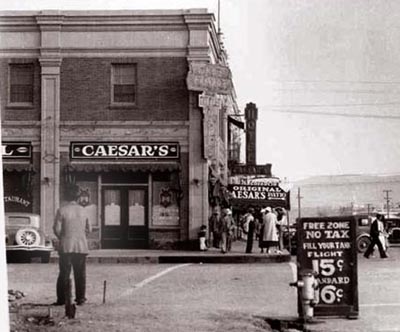
In 1896, Joe Marzetti of Columbus, Ohio, opened a restaurant and served his customers a variety of dressings developed from old country recipes. His restaurant might have done better if he had served them actual meals, but his dressings became so popular that he started to bottle and sell them.
It was the birth of a market niche.
Half a century later, in 1950, Americans bought 6.3 million gallons of salad dressing. In 1997, they bought more than 60 million gallons. (This information is indisputable, because it appears on the Association of Dressings and Sauces' website.)
Since the United States had a population of about 260 million in 1997, it looks like the average American buys about 4.3 gallons of salad dressing each year. That's enough to drip a tablespoon per mile from New York to Chicago. I myself don't buy salad dressing, which means that some poor bastard has to buy 8.6 gallons each year to make up the difference. But it all comes out in the wash: I'm probably drinking his gin.
It's informative to note, however, that the Association of Dressings and Sauces measures salad dressing sold, not consumed. We've all seen salad dressing in the final stages of decomposition, the once creamy sauce crusting around the edges and congealing in the bottom of the bottle. Added up nationwide, that's got to be a few million gallons a year.
And so it goes
Monday, April 27, 2015

Sunday, April 26, 2015
A Tidalwave of Terror
April 26, 1956 -
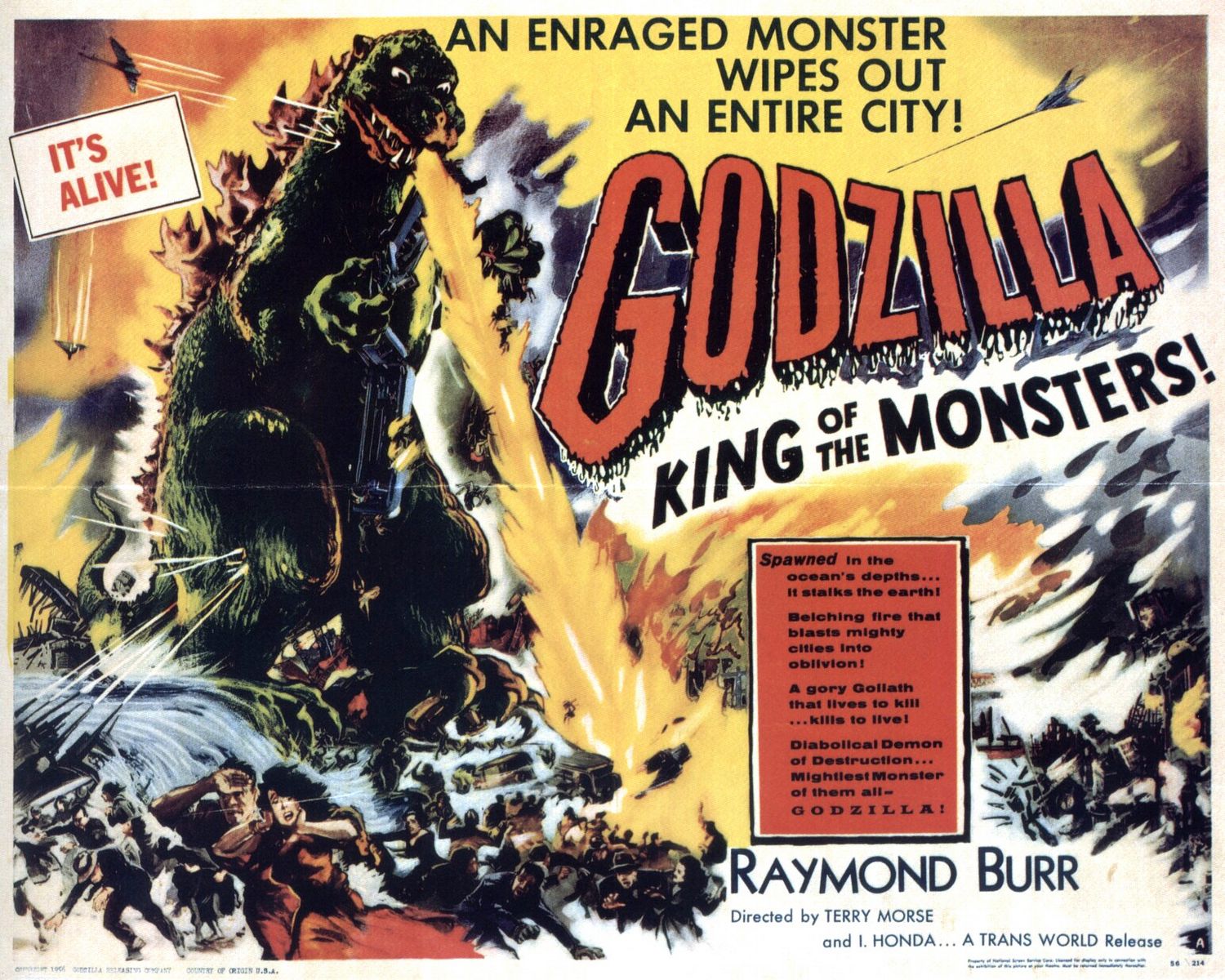
 Godzilla: King of All Monsters debuted in America on this date (Gojira premiered in Japan on November 3, 1954) :
With the ashes of World War II only recently cooled, Japan is plagued by a sudden wave of maritime disasters: Without warning, ships are exploding into flame and sinking beneath the waves. The few survivors are able to shed little light on the situation, as they quickly die from radiation and strange burns. (Hmmm, sound familiar) A group of investigators, including prominent paleontologist Dr. Yamane and American reporter Steve Martin (who was detoured from his trip to cover the Suez Crisis,) are sent to Odo Island to investigate. The natives warn that the ships are being destroyed by Gojira (Godzilla), a legendary monster. These claims are verified when a gigantic, dinosaur-like creature comes ashore and demolishes the native village. Dr. Yamane concludes that Godzilla is a prehistoric creature that has been awakened and mutated by atomic bomb tests. It's just the same conclusion you'd come to having just seen the ruins of a Japanese fishing village.
 The military decides to use depth charges on the monster. However, the attack is unsuccessful, and Godzilla follows the ships back to Tokyo Bay. (Again, probably just what you would do - annoy a giant radioactive monster.) Coming ashore at night, Godzilla razes Tokyo. The destruction left in his wake is comparable to an atomic bomb. Military firepower proves useless against the monster. It is feared that Godzilla will continue to lay waste to the cities of Japan, and perhaps the entire world.
It is up to Emiko Yamane (Dr. Yamane’s daughter) to convince her former fiancé, Dr. Serizawa, to use his Oxygen Destroyer against Godzilla. Serizawa is skeptical; he fears that this terrible device might be more dangerous than the monster. However, he finally decides to make the ultimate sacrifice to rid the world of Godzilla.
So here in a nutshell, you have the greatest fever dream movie ever re-edited - a very good Sci-Fi film intercut with, the undisputed king of deadpan delivery and nipple rouge entrepreneur.
 (We take Godzilla very seriously in our home.)
And so it goes.
With the ashes of World War II only recently cooled, Japan is plagued by a sudden wave of maritime disasters: Without warning, ships are exploding into flame and sinking beneath the waves. The few survivors are able to shed little light on the situation, as they quickly die from radiation and strange burns. (Hmmm, sound familiar) A group of investigators, including prominent paleontologist Dr. Yamane and American reporter Steve Martin (who was detoured from his trip to cover the Suez Crisis,) are sent to Odo Island to investigate. The natives warn that the ships are being destroyed by Gojira (Godzilla), a legendary monster. These claims are verified when a gigantic, dinosaur-like creature comes ashore and demolishes the native village. Dr. Yamane concludes that Godzilla is a prehistoric creature that has been awakened and mutated by atomic bomb tests. It's just the same conclusion you'd come to having just seen the ruins of a Japanese fishing village.

It is up to Emiko Yamane (Dr. Yamane’s daughter) to convince her former fiancé, Dr. Serizawa, to use his Oxygen Destroyer against Godzilla. Serizawa is skeptical; he fears that this terrible device might be more dangerous than the monster. However, he finally decides to make the ultimate sacrifice to rid the world of Godzilla.
So here in a nutshell, you have the greatest fever dream movie ever re-edited - a very good Sci-Fi film intercut with, the undisputed king of deadpan delivery and nipple rouge entrepreneur.

And so it goes.
Subscribe to:
Posts (Atom)